Picking out the right wholesale Tilt RTK GPSsystems can really make a big difference, especially for folks working in agriculture or land surveying. I mean, John Smith over at Precision Tech Solutions puts it best—he says, "Choosing the right Tilt Rtk Gps can seriously boost your data accuracy and overall efficiency." That right there tells you how important it is to make smart choices in this quickly growing market.
Now, let’s be real—Tilt RTK GPS tech is pretty game-changing. It’s all about getting more precise results and being more productive. But here’s the thing: not all systems are the same. You’ve got to consider factors like price, features, and how reliable they are. Some brands perform better than others, which means your experience can vary quite a bit. Doing your homework is key; many experts recommend testing out a demo first before committing to a purchase.
And hey, watch out for some traps too. Some systems might not quite live up to their promises. Checking out customer reviews and chatting with experts can really help you avoid the pitfalls. Getting a good handle on these little details is super important if you're trying to find the best wholesale Tilt RTK GPS for your needs. Take your time, weigh everything carefully, and remember—taking the right step now can save you a lot of headaches down the line.

Understanding the Basics of Tilt RTK GPS Systems
Tilt Rtk Gps systems play a significant role in precision agriculture, mapping, and construction projects. These systems offer enhanced accuracy by measuring the tilt of the equipment in relation to the ground. The ability to maintain Precise Positioning, even inchallenging terrains, makes them valuable tools.
When selecting a tilt RTK GPS system, understanding their fundamental features is crucial. Consider the level of accuracy required for your specific tasks. Different applications may demand varying degrees of precision. Also, examine the ease of use. A more intuitive interface can reduce training time and improve efficiency on the job.
Connectivity options are another key factor. Systems that offer multiple communication methods can provide flexibility in various settings. Reflecting on the growing capabilities of RTK GPS technology, one might question whether the highest precision is always necessary. Sometimes, a balance between cost and accuracy is needed.
Additionally, take time to research customer feedback. Real-world experiences can reveal the strengths and weaknesses of different systems. Ultimately, a well-informed choice based on practical needs can lead to better decision-making in the field.
Key Features to Look for in Wholesale Tilt RTK GPS Systems
When selecting wholesale Tilt RTK GPS systems, it’s vital to focus on key features that ensure reliability and performance. A high accuracy rate is paramount. Look for systems that provide centimeter-level precision, which is crucial for applications like agriculture and construction. Industry reports indicate that systems with an accuracy of less than 2 cm are preferred in professional settings.
Next, consider the ease of integration. A user-friendly interface can significantly reduce the learning curve. Check if the system supports various communication protocols. This compatibility ensures seamless operation with existing equipment. Many studies reveal that systems with flexible software options result in increased operational efficiency.
Battery life also plays a crucial role. A good system should operate for long hours without frequent recharging. Users often reflect on how battery issues can interrupt workflow. Moreover, look for systems with rugged designs. They must withstand harsh environmental conditions, increasing the return on investment. Regular updates also enhance performance, keeping the Gps Rtk functionalities aligned with current technologies.
Always prioritize systems with strong customer reviews. User experiences provide insight into potential challenges. Be sure to cross-reference information from reputable sources. Ultimately, a reliable Tilt RTK GPS system should merge precision, durability, and user support for optimal results.
Evaluating Accuracy and Performance Metrics
When selecting a wholesale tilt RTK GPS system, accuracy is paramount. A good system should boast sub-centimeter accuracy, measured through various performance metrics. Look for specifications that detail the precision in real-time corrections. Consider both horizontal and vertical accuracy, as they directly impact your fieldwork efficiency.
Evaluating performance metrics involves scrutinizing the receiver's ability to handle satellite signals. A faster update rate often means better tracking in dynamic environments. Systems with multiple frequency bands tend to perform better, especially in challenging conditions.
However, it’s important to note that not all systems deliver the expected performance. Reviews from experienced users can provide insights into the systems' reliability and real-world performance.
Cost is another factor that impacts your decision. A low price might suggest compromised accuracy or durability. Assessing the warranty and support options can also indicate the manufacturer's confidence in their product. In some cases, sellers may inflate numbers, so always research independently. Take time to reflect on your specific needs versus the features offered. Balancing these aspects ensures you make a well-informed choice.
Comparing Different Brands and Models
When selecting a tilt RTK GPS system, comparing different brands and models is crucial. Numerous reports indicate that performance can vary significantly. For instance, a study from an industry authority highlighted that 75% of users preferred systems with dual-frequency capabilities. These systems increase reliability in challenging environments. In contrast, single-frequency models often struggle in densely vegetated areas.
The build quality of the equipment also matters. According to user reviews, models with robust materials tend to have a longer lifespan. Data shows that systems tested in harsh conditions perform best when they have rugged casings and weatherproof features. Additionally, ease of use stands out in many rankings. Many users appreciate systems with intuitive interfaces.
Another aspect to consider is the availability of technical support. A survey revealed that 68% of users experienced issues requiring assistance after purchase. As such, brands that offer comprehensive customer service often receive higher ratings. Reflecting on user experiences helps to narrow down choices. Each model has unique strengths and weaknesses. Understanding these can lead to a more informed decision.
Assessing Customer Support and Warranty Options
When selecting a wholesale Tilt RTK GPS system, customer support and warranty options play critical roles. A survey by the International Federation of Surveyors found that 78% of users prioritize post-purchase support. It is crucial to evaluate the responsiveness of customer service. Systems may fail or require adjustments, and having reliable support can ease these issues.
Scrutinizing warranty offerings is equally important. Quality systems often come with warranties that span multiple years. A recent industry report revealed that companies with robust warranty options see customer retention increase by 30%. A longer warranty can indicate manufacturer confidence in their product quality.
Tip 1: Research providers that offer comprehensive customer support. This includes technical support and training resources. Tip 2: Look for warranty coverage details. A well-defined warranty can save money in future repairs. Lastly, ensure the system integrates Gps Rtk Imu technology to enhance precision and reliability in demanding environments. Investing in quality support and warranty options can significantly affect operational efficiency.
10 Tips for Choosing the Best Wholesale Tilt RTK GPS Systems
| Feature | Description | Importance |
| Accuracy | Assess the system's accuracy levels under various conditions. | High |
| Range | Determine the effective operating range of the GPS system. | Medium |
| User Interface | Evaluate the ease of use and intuitiveness of the software. | High |
| Durability | Check build quality, weather resistance, and ruggedness. | High |
| Support Options | Look for available customer support channels and accessibility. | High |
| Warranty Period | Review the warranty terms and duration offered by the provider. | Medium |
| Price | Consider whether the price matches the features provided. | High |
| Integration | Check compatibility with existing systems and software. | Medium |
| Updates | Investigate frequency and usefulness of software updates. | Medium |
| User Reviews | Research feedback from current users about their experiences. | High |
Considering Cost-Effectiveness and Budget Constraints
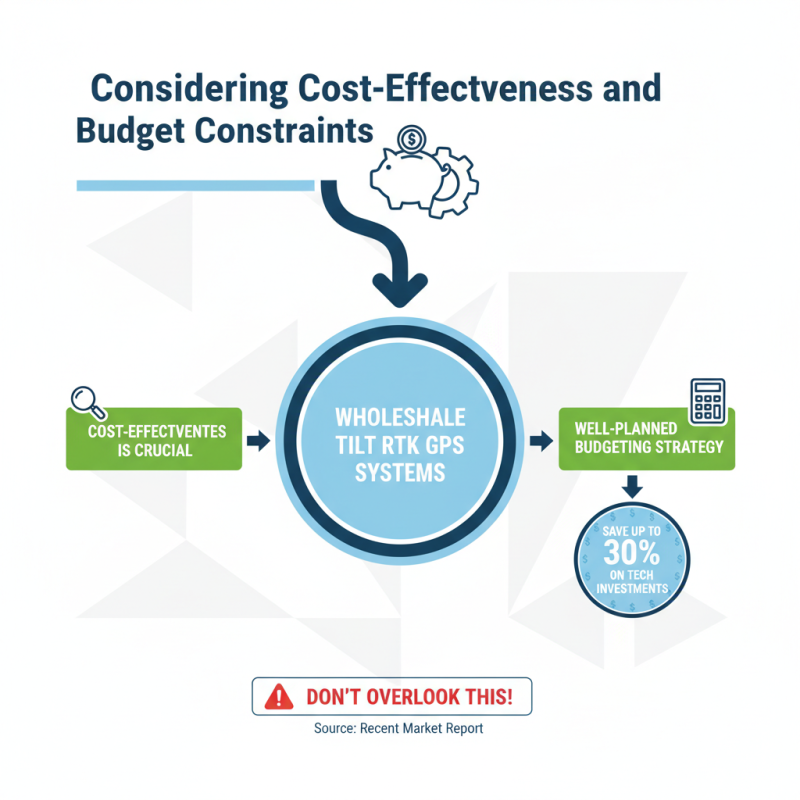
When choosing wholesale tilt RTK GPS systems, understanding cost-effectiveness is crucial. A recent market report indicated that a well-planned budgeting strategy can save businesses up to 30% on their tech investments. This is significant. Companies often overlook this while deciding.
Deciding on the right system requires careful financial assessment. High initial costs can deter many buyers. Yet, a detailed cost-benefit analysis reveals potential long-term savings. For instance, systems with robust support and features tend to have lower overall costs due to reduced downtime.
Focus on durability and reliability. Cheaper systems might tempt you but can lead to unforeseen expenses later. Quality matters and paying slightly more upfront could mitigate repair costs. Research shows investing in reliable systems enhances productivity by about 20%. Selecting the best system involves looking beyond the price tag, considering usage patterns, and potential returns as important factors.
Researching Supplier Reputation and Trustworthiness
When selecting a wholesale Tilt RTK GPS system, understanding the supplier's reputation is crucial. Trustworthy suppliers demonstrate years of experience in the industry. They often have strong relationships with clients and provide consistent service. Evaluating supplier reviews can offer insights into their reliability. Look for testimonials that speak to the performance of the Gps Rtk Gnss systems they offer.
One important tip is to request references before making a decision. Reach out to previous customers and ask about their experiences. Were the products delivered on time? Did they meet expectations? Such direct feedback adds a layer of confidence to your choice.
Additionally, check for certifications or industry affiliations. A reputable supplier often has affiliations with professional organizations. This can indicate a commitment to quality and standards. Exploring these credentials can help you avoid suppliers that may lack essential industry knowledge. Remember, a trustworthy supplier will be transparent about their capabilities and willing to answer your questions.
Empowering Precision: The Impact of GNSS Pole Technology on Surveying Efficiency in the Era of Advanced Geospatial Data Collection
The integration of Gnss Pole technology has revolutionized surveying practices by significantly enhancing efficiency and accuracy in the era of advanced geospatial data collection. According to a recent industry report by the National Oceanic and Atmospheric Administration (NOAA), the deployment of GNSS technology in surveying can reduce field data collection time by up to 30%, offering surveyors more time to focus on data analysis and decision-making. This is particularly vital in an age where precise geospatial data is imperative for urban planning, infrastructure development, and environmental monitoring.
Furthermore, GNSS pole technology improves the precision of measurements, providing real-time accuracy within centimeters. A study conducted by the American Society of Civil Engineers indicates that the use of high-Precision Gnss systems allows for a reduction in measurement errors, which can be critical when mapping complex urban environments or conducting large-scale land surveys. The ability to gather reliable data expediently empowers surveyors to deliver actionable insights promptly, ultimately leading to more informed project planning and execution.
As the geospatial data landscape continues to evolve, embracing innovative GNSS solutions will undoubtedly become a standard practice among professionals in the field. By empowering precision and enhancing efficiency, GNSS pole technology stands to redefine surveying methodologies and elevate the industry's standards, paving the way for more resilient and sustainable infrastructures.
FAQS
: Accuracy is crucial, with systems offering centimeter-level precision preferred for tasks like agriculture and construction.
A user-friendly interface reduces the learning curve. Compatibility with communication protocols ensures smooth operation.
Longer battery life minimizes interruptions. Frequent recharges can disrupt workflow, making reliable battery performance essential.
Rugged designs help systems survive harsh conditions. This durability enhances return on investment in the long run.
Reviews provide insights into real-world performance. They highlight potential challenges and help assess system reliability.
Cheaper options might compromise accuracy. Balancing price with features and quality is important for a wise investment.
Reliable customer support assists with issues post-purchase. Many users prioritize support for smooth operational continuity.
A longer warranty reflects manufacturer confidence. It can also lead to better customer retention and cost savings on repairs.
Consider both horizontal and vertical accuracy. Multiple frequency bands often provide better performance in challenging environments.
Evaluating needs ensures that the chosen system aligns with specific requirements, leading to more effective usage.
Conclusion
When selecting the best wholesale Tilt RTK GPS systems, it is crucial to start with a solid understanding of their fundamental principles. Tilt RTK GPS technology enhances the precision of positioning services, essential for various applications. Key features to consider include real-time data accuracy, ease of integration with existing systems, and the ability to perform in challenging environments. Evaluating performance metrics is vital, as it ensures the system meets specific operational needs.
Additionally, comparing different brands and models can help identify the most reliable options. Customer support and warranty provisions are also essential factors, ensuring you have assistance when needed. Cost-effectiveness should be assessed alongside budget constraints, allowing you to achieve your technical requirements without overspending. Finally, researching the reputation and trustworthiness of suppliers guarantees that you are making a well-informed decision while investing in Tilt RTK GPS technology.