inquiry
Leave Your Message
0%

Lately, there's definitely been a big uptick in demand for precise positioning tools across China, especially when it comes to GNSS tech. Honestly, industry reports from the International GNSS Service are estimating that the market for these kinds of gadgets in Asia could grow by around 15% every year. One of the big drivers behind this boom? It's the Carbon Telescopic Pole Gnss. These poles are pretty awesome—they’re lightweight but still sturdy, making life a lot easier for surveyors and researchers out in the field, helping them work more efficiently.

A good Carbon Telescopic Pole GNSS really can make a difference when it comes to how accurate your data collection is. Big names like Leica Geosystems and Trimble have poured a lot of resources into R&D to make these tools even better. But here’s the thing—not all carbon poles are the same. Sometimes, cheaper ones might seem tempting but often fall short on stability and reliability. That can lead to measurement errors—definitely not what you want after investing in GNSS gear.

As folks keep relying more and more on Carbon Telescopic Pole GNSS for all sorts of projects, it’s super important to know what to look for when choosing the right model. Checking out the top options available in China can help you pick something that actually meets your needs. Still, it’s important to look closely at each model’s features and potential drawbacks—mind you, not all poles are created equal.
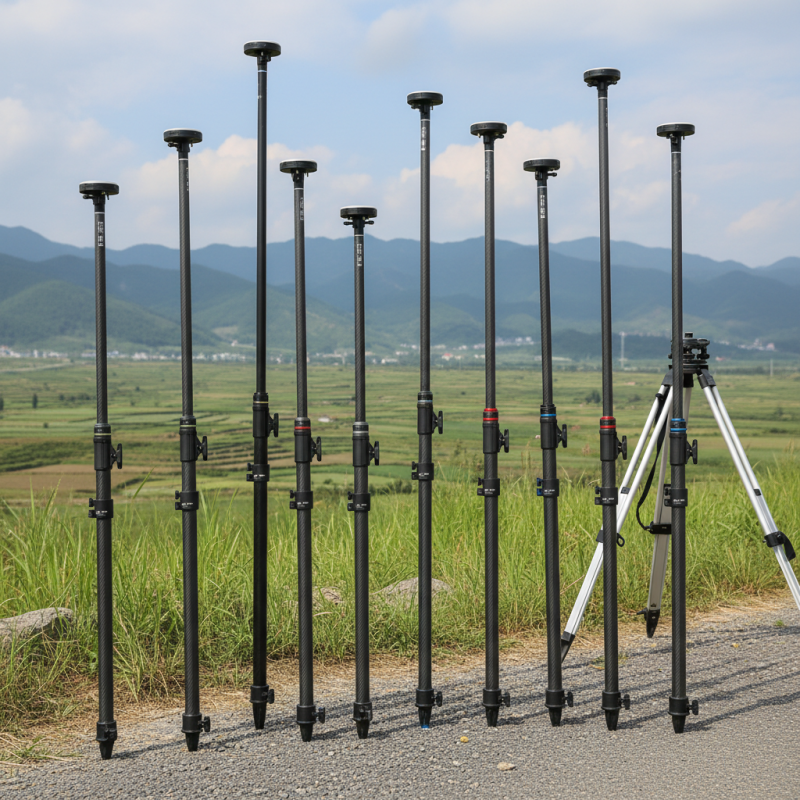
Top 10 Carbon Telescopic Poles for GNSS Setup in China?

Overview of GNSS Setup and Its Importance in Surveying

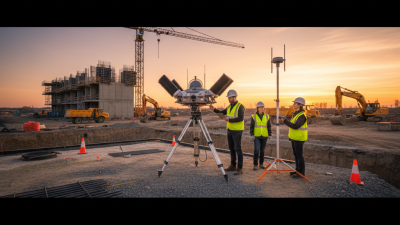
Global Navigation Satellite System (GNSS) setups are crucial in modern surveying. Accurate data collection aids in planning, construction, and mapping projects. Recent reports indicate that using GNSS technology can improve positioning accuracy to within centimeters. This precision is vital for land surveys and infrastructure development.

In China, the rapid urbanization and infrastructure projects increase the demand for reliable GNSS systems. Moreover, the integration of GNSS with Geographic Information Systems (GIS) enhances spatial data analysis. According to industry studies, over 80% of surveying firms utilize GNSS tools for these purposes. However, the environmental conditions and urban landscapes can affect signal strength, leading to inaccuracies.

Surveyors emphasize the need for quality equipment. Telescopic poles designed for GNSS setups are integral to achieving optimal results. Proper poles elevate receivers, reducing obstructions and multipath errors. Yet, issues like portability and durability remain challenges. Frequent fieldwork can lead to wear and tear, impacting performance. Surveyors must address these aspects for effective deployment in various terrains.

Understanding Carbon Telescopic Poles and Their Benefits

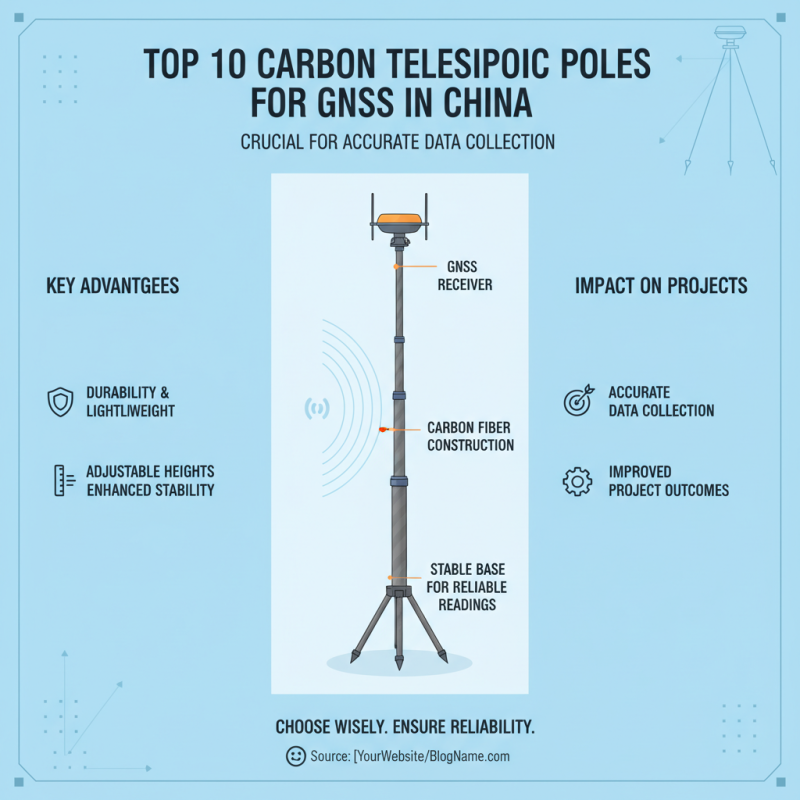
Carbon telescopic poles have become popular in GNSS setups, particularly in China. These poles offer durability and lightweight design, making them suitable for various surveying applications. Their carbon construction provides excellent stability and resistance to bending, which is crucial in field environments.

The benefits of carbon telescopic poles extend beyond their physical properties. They are resistant to corrosion and temperature extremes, ensuring longevity. This resilience translates to fewer replacements and lower long-term costs. Additionally, many users appreciate how easy these poles are to transport, reducing fatigue during extensive fieldwork. However, the challenge of balancing lightweight design with durability remains a topic for discussion among professionals.

Investing in quality equipment is essential for accuracy in GNSS work. While carbon poles have advantages, they can sometimes be pricier than their aluminum counterparts. For some, this raises questions about budget constraints and overall value. It's crucial to weigh the benefits against the potential drawbacks. Understanding these factors will enable users to make informed decisions, leading to better surveying outcomes.

Criteria for Selecting Top Carbon Telescopic Poles

Top 10 Carbon Telescopic Poles for GNSS Setup in China?

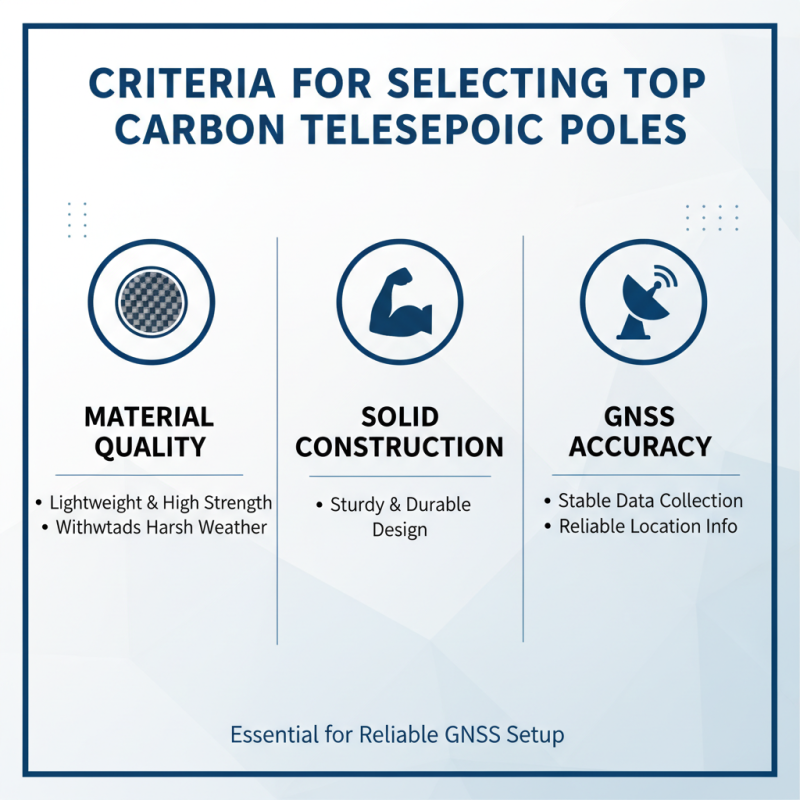
When selecting the best carbon telescopic poles for GNSS setup, several factors play a crucial role. The material quality is paramount. Carbon poles are favored for their lightweight and high strength. They are easy to carry but still able to withstand harsh weather conditions. Look for poles that have a solid construction. A sturdy pole ensures accuracy in location data collection.

The height range is another key criterion. Poles should extend to various heights for different surveying needs. Consider options that can easily adjust and lock into place. This flexibility is necessary for diverse terrains. A pole that is too short can hinder data accuracy, while one that doesn't lock properly can be frustrating.

Weight matters, as well. A heavier pole can be cumbersome during long setups. Ideal options balance weight and stability. However, it is worth acknowledging that some may compromise on durability. Regular users may find that lighter poles could bend or break more easily.

Overall, while searching for the right Telescopic Rtk Pole, prioritize your specific use case. Each project might reveal different needs, leading to multiple reassessments of your initial choice.

Review of the Top 10 Carbon Telescopic Poles for GNSS in China

Top 10 Carbon Telescopic Poles for GNSS Setup in China?

When setting up GNSS systems, choosing the right carbon telescopic pole is crucial. These poles offer durability and lightweight advantages. They are designed to withstand the rigors of the field. Most are adjustable, making them versatile for various heights. The stability they provide is essential for accurate GNSS data collection. A solid base ensures reliable readings, which can impact project outcomes.

However, not all carbon poles are created equal. Some may feel flimsy under heavy use. Users often report that certain models struggle in windy conditions. It’s worthwhile to consider user reviews and feedback when selecting a pole. Look for familiar features, such as locking mechanisms and grip quality. A reliable pole can enhance the effectiveness of your GNSS setup.

Field tests reveal that carbon materials excel in terms of weight. This can significantly ease transport and setup. Yet, if the pole is too lightweight, it might compromise stability. Balancing weight and durability is essential. Therefore, it’s vital to assess individual needs before making a purchase, ensuring your choice aligns with field conditions. The perfect Gnss Pole Carbon option is one that meets both demands for performance and ease of use in real-world scenarios.

Comparative Analysis of Features and Specifications

When choosing a Gnss Carbon Fiber Pole, understanding the features is crucial. These poles vary in weight and stiffness, impacting performance. A lighter pole can reduce fatigue during long surveys, while a stiffer pole improves signal accuracy. The length is also a factor. Many options range from 2 to 5 meters, allowing for versatility in different environments.

Setting up requires an understanding of the specifications. Look for poles with good vibration resistance. Stability is essential for accurate readings. It's also vital to ensure compatibility with various Gnss Receivers. Not all poles will fit every device perfectly, which can be a frustrating oversight.

Consider the grip and overall design as well. A well-designed handle can improve usability, especially in challenging conditions. Some poles offer adjustable sections for height adaptability. However, they may be less durable than fixed-length alternatives. Weighing features and potential drawbacks will guide you in making an informed choice for your GNSS setup.

User Feedback and Performance Insights on Selected Poles

When it comes to GNSS setups, the choice of a carbon telescopic pole can greatly impact your results. User feedback often highlights the importance of lightweight design and durable materials. Many professionals point out that a balance between rigidity and flexibility is crucial. A pole that bends too much may lead to inaccurate readings. Conversely, poles that are too rigid may be susceptible to breakage in harsh conditions.

Performance insights gather around ease of use. Users appreciate adjustable heights and quick-lock mechanisms. A pole that is easy to extend or retract can save time in the field. Numerous reviews indicate that poles with clear measurement markings are preferred, ensuring accuracy in setup. However, feedback does suggest that some poles lacked a stable base, resulting in wobbling during measurements.

Users also reflect on the longevity of these poles. Although many find that high-quality poles perform well over time, others face challenges like wear and tear. Some materials do not withstand outdoor elements, leading to dissatisfaction. Regular maintenance is necessary for optimal performance. This insight underscores the importance of selecting a pole suited for specific environments to enhance overall reliability.

Maintenance and Care Tips for Carbon Telescopic Poles

Taking care of your carbon telescopic poles is crucial for longevity and performance. Regular maintenance ensures these poles remain reliable during your GNSS setups. For instance, inspect your Gnss Folding Carbon Pole for any signs of wear or damage. Sand or debris can scratch the surface, impacting its strength.

When cleaning your poles, use a soft cloth and mild detergent. Avoid abrasive materials that might harm the finish. After cleaning, store the poles in a protective case to shield them from environmental elements. This simple act can prolong their lifespan significantly.

Do not overlook the importance of checking the locking mechanisms. Make sure they are functioning smoothly and tight. Loose locking mechanisms can lead to unexpected collapses, posing safety risks. It’s wise to practice care while handling; mishaps can lead to long-term damage. Regular attention goes a long way in maintaining the quality of your carbon poles.

Revolutionizing Precision: Exploring the AP30 Laser Dual-Cameras RTK GNSS Receiver with Cutting-Edge Technology Innovations

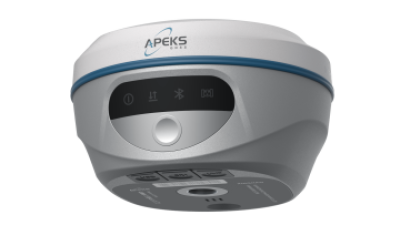
The AP30 Laser Dual-Cameras Rtk Gnss Receiver is setting new standards in precision technology, making significant advancements in the realm of geospatial data collection and analysis. At the core of this innovative device are cutting-edge technologies designed to enhance accuracy and efficiency. The integration of the latest GNSS capabilities ensures that users experience unprecedented positioning precision, while the Super IMU elevates motion sensing to new heights, allowing for seamless operation even in challenging environments.

Moreover, the incorporation of millimeter-level green laser technology distinguishes the AP30 as a high-end solution for professionals seeking detailed and accurate data. This feature is particularly beneficial in scenarios where traditional methods may fall short, providing a visual reference that aids in precise measurement and verification tasks. The dual-cameras enhance this capability by capturing comprehensive images alongside data, facilitating a more thorough analysis for various applications, from surveying to construction.

As we explore the potential of the AP30 Laser Dual-Cameras RTK GNSS Receiver, it becomes clear that its sophisticated technological integrations are designed to revolutionize the way we approach precision tasks in various industries. This receiver stands at the forefront of innovation, proving that commitment to cutting-edge technology is essential for meeting the ever-evolving demands of the geospatial industry.

FAQS

: Why are carbon telescopic poles important for GNSS setups?

: They offer durability and lightweight advantages, essential for accurate data collection.

What should I consider when selecting a carbon pole?

Look for user reviews, locking mechanisms, and grip quality for better performance.

How does weight affect the choice of a carbon pole?

A lighter pole eases transport but may compromise stability in windy conditions.

What features should I focus on when comparing poles?

Assess weight, stiffness, length, and compatibility with GNSS receivers for optimal use.

How can I ensure stability with a carbon pole?

Choose poles with good vibration resistance and reliable locking mechanisms.

What maintenance tips are important for carbon poles?

Inspect for wear, clean with a soft cloth, and store in a protective case.

Why is the grip design significant in a carbon pole?

A well-designed handle improves usability, especially in challenging field conditions.

What might be a downside of adjustable poles?

They are often less durable than fixed-length options, which might affect usability.

How often should I check the locking mechanisms?

Regular checks are vital; loose locks can lead to collapses and safety hazards.

What cleaning methods should I avoid?

Steer clear of abrasive materials that could damage the pole's finish or strength.

Conclusion

The article titled "Top 10 Carbon Telescopic Poles for GNSS Setup in China" delves into the essential role of GNSS (Global Navigation Satellite System) in modern surveying applications. It highlights the advantages of utilizing Carbon Telescopic Poles for GNSS due to their lightweight, durability, and ease of transport, significantly enhancing the efficiency of measurement setups in the field.

In selecting the best Carbon Telescopic Pole GNSS, key criteria are discussed, including materials, height adjustability, stability, and cost-effectiveness. The piece provides a comprehensive review of the top ten models available in China, featuring a comparative analysis of their specifications and user feedback, which aids in making informed decisions. Additionally, the article offers practical maintenance tips to ensure longevity and optimal performance of these important surveying tools.
Isabella

Isabella

Isabella is a dedicated marketing professional at Shanghai Apekstool (APEKS), where her expertise in innovative geospatial surveying and mapping products shines. With a deep understanding of the company's core offerings, which include GNSS/GPS systems, total stations, levels, theodolites, and......
Previous Discover the Best Portable RTK Solutions for Global Buyers?